Assignment Planner for KDP: Creating Functional Interiors That Actually Sell
Creating a successful low-content or medium-content book on Amazon KDP often comes down to one specific factor: utility. While beautiful covers catch the eye, it is the interior that generates reviews and repeat customers. An Assignment Planner for KDP serves as a foundational tool for publishers who want to move beyond generic lined notebooks and offer genuine value to students, professionals, and lifelong learners. When you utilize high-resolution, print-ready interiors designed specifically for this niche, you bridge the gap between a simple digital download and a professional-grade physical product.
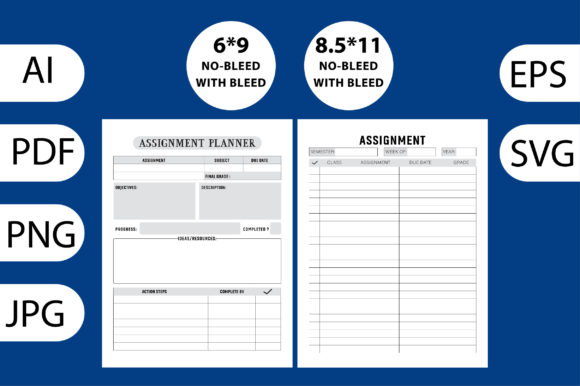
The market for academic and organizational tools is saturated with low-effort templates. To stand out, your planner needs to be crisp, functional, and formatted correctly for both 8.5×11 and 6×9 trim sizes. Having access to editable source files like AI, EPS, and SVG transforms this from a static template into a flexible asset for your publishing business. This flexibility allows you to adapt to specific sub-niches, whether you are targeting nursing students, coding boot camp attendees, or homeschooling parents.
Why Editable Source Files Matter for Long-Term Success
Many KDP sellers make the mistake of relying solely on pre-made PDFs. While a printable PDF is excellent for immediate upload, the inclusion of AI, EPS, and SVG editable files is what provides long-term viability for your publishing portfolio. Adobe Illustrator compatibility means you are not locked into someone else’s design decisions.
Consider a scenario where you identify a trending micro-niche, such as "assignment tracking for dental hygiene students." With a standard PDF, you would need to find an entirely new template. With editable vector files, you can open the master document, adjust the terminology in the headers, modify the grading scale columns, and export a fresh, highly targeted PDF in minutes. This capability significantly reduces production time and allows you to test multiple variations of the same core Assignment Planner for KDP without additional design costs.
Furthermore, vector-based editing ensures that no matter how much you resize or rearrange elements, the lines remain sharp at 300 DPI. Rasterized images often pixelate when adjusted, leading to poor print quality and negative customer feedback. Maintaining high-quality standards through vector editing protects your brand reputation.
Real-World Applications Across Different Niches
An effective assignment planner is not a monolith; its utility changes depending on who is holding the pen. Understanding these distinct use cases helps you market your books more effectively and customize your interiors to meet actual needs.
University and College Students
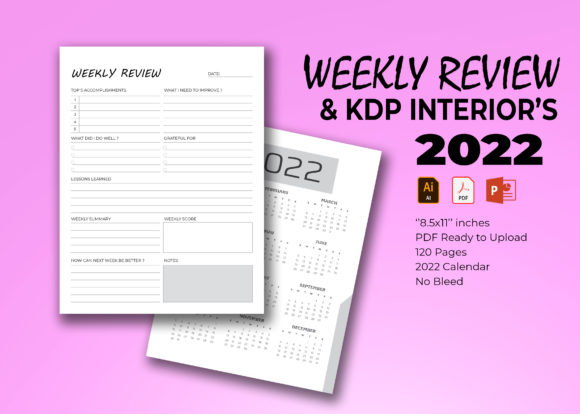
For undergraduate and graduate students, the primary pain point is managing overlapping deadlines across multiple courses. A generic calendar does not account for syllabus weeks, reading assignments, and exam prep simultaneously. In this context, your planner should feature weekly spreads that allow for course-specific breakdowns. The 8.5×11 inch size is typically preferred here because it offers ample space for detailed notes alongside schedule tracking. Students often use these planners to map out entire semesters, so having 100 pages of consistent, structured layouts supports their long-term academic planning.
Homeschool Educators and Parents
Homeschooling requires a different type of organization. Parents are often tracking progress for multiple children across various subjects without the structure of a traditional classroom. Here, the 6×9 inch option becomes incredibly valuable due to its portability. A parent might carry this planner to co-op classes, library visits, or extracurricular activities. The interior layout for this demographic often benefits from sections dedicated to attendance tracking, resource lists, and flexible daily goals rather than rigid hourly slots. Customizing your Assignment Planner for KDP to include these specific fields can make it a staple resource for homeschooling families.
Professional Certification and Continuing Education
Adult learners pursuing certifications in IT, healthcare, or real estate face intense study schedules while working full-time. Their planning needs are about efficiency and milestone tracking rather than semester-long pacing. For this audience, the planner functions as a project management tool for their education. They need clear visibility on study hours completed versus required, practice exam scores, and renewal deadlines. Because this demographic values professionalism, the clean, high-resolution aesthetic of a premium interior signals that the product is worth the investment.
Navigating Technical Specifications for Print Quality
One of the most common reasons for KDP rejection or customer complaints regarding low-content books is improper formatting. Understanding the technical nuances of bleed versus no-bleed is essential when preparing your Assignment Planner for KDP.
No-Bleed vs. Bleed: Most assignment planners utilize a no-bleed format, meaning all content stays within a safe margin away from the edge of the page. This is generally safer for text-heavy planners and ensures nothing gets trimmed off during manufacturing. However, if your design includes decorative borders, background patterns, or tabs that extend to the page edge, you must use the bleed version. The downloadable assets providing both options save you from having to manually calculate margins, which varies based on page count and trim size.
Resolution Standards: Always verify that your final export is set to 300 DPI. While screens display images clearly at 72 DPI, print requires three times that density to avoid blurriness. Since the provided interiors are already optimized at 300 DPI, your main responsibility is ensuring you do not accidentally downsample the file during export or compression. A crisp line separating a "To-Do" box from a "Notes" section might seem minor, but it contributes to the overall perception of quality.
Strategic Considerations Before Publishing
Before you upload your first assignment planner, take time to validate your approach. Having high-quality tools is only half the battle; applying them strategically determines sales performance.
- Analyze Competitor Interiors: Look at the "Look Inside" feature of best-selling assignment planners. Are they using tiny fonts? Is there enough writing space? Do they include reference pages? Use your editable files to fix the frustrations users express in competitor reviews.
- Test Both Trim Sizes: Don't assume one size fits all. The 8.5×11 format dominates the desk-study niche, while 6×9 captures the on-the-go market. Consider publishing both versions as separate listings to capture the full spectrum of search intent.
- Verify Page Count Relevance: One hundred pages is a standard sweet spot for assignment planners, offering enough room for a full semester or quarter without making the book too bulky or expensive to print. Ensure your interior actually utilizes all 100 pages meaningfully rather than padding with blank sheets.
- Customize for Seasonality: Academic planning is highly seasonal. Use your SVG and AI files to create dated versions for specific academic years or undated versions for year-round learners. Dated planners have higher perceived value but shorter shelf life, while undated planners sell consistently but face stiffer competition.
Maximizing the Value of Your Download
When you acquire an Assignment Planner for KDP package, treat it as a production system rather than a single product. The combination of ready-to-upload PDFs and editable source materials supports both speed and customization. Start by uploading the pre-formatted PDFs to establish a baseline presence in the category. Simultaneously, use the Illustrator files to develop unique variations that address specific gaps you notice in the market.
Remember that customers are buying a solution to disorganization and academic stress. Every design choice, from the font size to the spacing of the writing lines, should serve that solution. By leveraging high-resolution, professionally formatted interiors, you remove the technical barriers to entry and focus your energy on what truly matters: connecting with your audience and providing a tool that genuinely improves their daily lives. Whether serving a college freshman overwhelmed by coursework or a freelancer managing continuing education credits, a well-executed assignment planner remains a timeless and profitable addition to any KDP catalog.