Christmas Shopping Tracker KDP: Selecting the Right Interior for Seasonal Success
The holiday season represents one of the most significant revenue windows for low-content book publishers, but capitalizing on this demand requires more than just uploading a generic template. A Christmas Shopping Tracker KDP interior serves as a functional tool for end-users trying to manage budgets, gift lists, and shipping deadlines during a chaotic time of year. For creators, it represents a high-potential asset that can generate passive income if executed with precision. However, the market is becoming increasingly sophisticated. Buyers are no longer satisfied with basic lined pages; they expect thoughtful layouts that solve specific organizational problems.
When evaluating or creating a Christmas Shopping Tracker KDP product, understanding the technical and practical nuances is essential. Many publishers overlook critical specifications or user experience elements that ultimately lead to poor reviews and low sales velocity. By addressing common pitfalls regarding page counts, file formats, and dimensional accuracy, you can position your product as a premium solution rather than just another seasonal placeholder.
Evaluating Page Count Versus User Utility
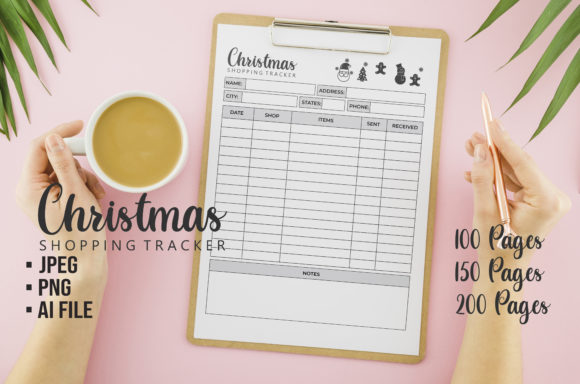
One of the most frequent mistakes in this niche is assuming that more pages automatically equal higher value. While having options for 100, 150, and 200-page interiors provides flexibility, misaligning the page count with the intended use case can hurt usability. A 200-page shopping tracker might seem comprehensive, but for a casual shopper tracking gifts for ten family members, it becomes an unwieldy burden. Conversely, a 100-page book may lack sufficient space for users who track expenses, wrapping supplies, and card mailing lists simultaneously.
To avoid this mismatch, consider the density of information per page. If your interior design includes large writing spaces, elaborate decorative borders, and multiple tracking columns per entry, a 100-page version may actually offer more utility than a cramped 200-page layout. When offering multiple variations, clearly differentiate them by user persona rather than just thickness. Market the 100-page version as a streamlined essentials tracker, the 150-page as the standard comprehensive planner, and the 200-page as the ultimate organizer for large families or small business owners managing corporate gifting. This clarity helps customers select the right tool, reducing returns and negative feedback regarding size expectations.
Technical Specifications and Print Readiness
Dimensional accuracy is non-negotiable in KDP publishing. The 8.25” x 11” specification is a popular choice for shopping trackers because it offers ample horizontal space for spreadsheet-style layouts without feeling as massive as a standard letter-sized document. However, a common error occurs when creators fail to account for bleed and safe zones specific to this trim size. Even if your source file is labeled as print-ready, always verify the actual canvas size against current KDP guidelines before uploading.
Margins are particularly critical for shopping trackers. Users need space to write near the binding without their notes disappearing into the gutter. A frequent oversight is using uniform margins on all sides. For an 8.25” x 11” interior, especially one exceeding 100 pages, you must implement mirrored margins to accommodate the binding. Failing to do so results in a frustrating user experience where content is obscured, leading to reviews that criticize the book’s functionality despite the quality of the design itself. Always preview your PDF using Amazon’s online previewer or a physical proof copy to ensure the writable area remains accessible throughout the entire book.
File Format Integrity and Editability
The availability of JPEG, PDF, and editable AI files suggests versatility, but each format serves a distinct purpose that is often misunderstood. Relying solely on JPEGs for a KDP interior is a significant misstep. While JPEGs are useful for marketing mockups or digital downloads, they are unsuitable for print-ready interiors due to compression artifacts and lack of vector sharpness. Text and lines in JPEGs can appear pixelated or fuzzy when printed, diminishing the perceived quality of the Christmas Shopping Tracker KDP product.
Always prioritize high-quality, print-ready PDF files for the final upload. These should be exported with embedded fonts and proper color profiles (typically grayscale for cost-efficiency or CMYK for color interiors). The inclusion of editable AI files is a tremendous value-add for other creators or those wishing to customize the tracker for personal use, but it comes with responsibility. Ensure that all fonts are either outlined or included in the package, and that layers are logically organized. Providing a messy, unlabelled AI file creates confusion and devalues the premium nature of the bundle. Clear documentation on how to edit the file safely prevents users from accidentally breaking the layout, ensuring satisfaction across both end-consumers and fellow designers.
Design Functionality Over Aesthetic Fluff
In the rush to create festive designs, functionality often takes a backseat to decoration. While holly borders and snowflake motifs are expected in a Christmas Shopping Tracker KDP interior, excessive ornamentation can reduce the usable writing space. A common mistake is placing dark graphical elements too close to text fields, which can cause ink saturation issues on standard KDP paper or make handwriting difficult to read.
Prioritize whitespace and legibility. Test your design by printing a sample page at home and actually writing in it with various pens. If the decorative elements interfere with tracking prices, store names, or recipient details, simplify the layout. Remember that the primary job of this book is organization. Successful trackers balance seasonal charm with rigorous utility. Consider including functional extras like budget summary pages, gift receipt storage pockets (printed representations), or shipping deadline calendars. These features distinguish a high-quality interior from a generic notebook and justify a higher price point.
Strategic Positioning and Quality Assurance
Before finalizing your Christmas Shopping Tracker KDP project, conduct a thorough competitive analysis focused on gaps rather than imitation. Look at existing bestsellers and read the three-star reviews. These often reveal specific pain points, such as "lines too narrow," "no space for online order numbers," or "binding eats up the margin." Addressing these specific complaints in your 100, 150, or 200-page versions creates an immediate competitive advantage.
Furthermore, treat your product listing with the same attention to detail as the interior. Clearly state the dimensions, page count, and paper type in the description. Since this item is marketed as a great gift, emphasize its suitability for different recipients, from busy parents to meticulous planners. Highlighting the inclusion of editable files can also attract a secondary audience of crafters and resellers. By focusing on solving real organizational challenges and adhering to strict technical standards, you transform a simple seasonal download into a reliable, high-selling asset that serves users effectively throughout the holiday rush.