Evaluating the Block Schedule KDP Interior for 2022 Publishing Projects
For self-publishers and content creators targeting the productivity niche, selecting the right interior template is as critical as designing an engaging cover. The Block Schedule KDP Interior represents a specific approach to time management publishing that differs significantly from standard hourly planners or blank journals. When considering the 2022 Block Schedule – KDP Interior, specifically formatted for Amazon’s print-on-demand platform, it is essential to understand not just the file specifications, but how this structural format aligns with current market demands and user behaviors.
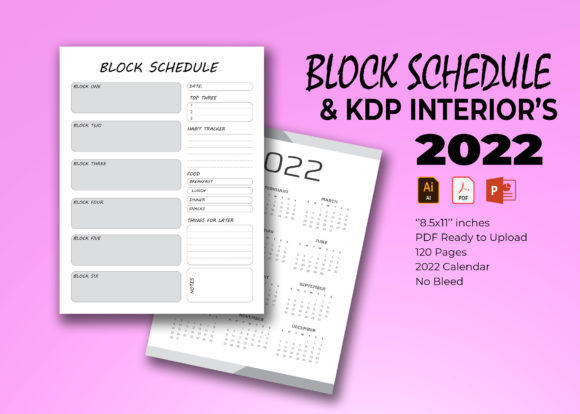
A block schedule interior organizes time into distinct segments or "blocks" rather than rigid hourly slots. This format appeals to users who practice time-blocking, deep work, or flexible routine management. The 2022 edition of this resource provides a pre-formatted foundation including a full calendar and 120 pages of structured layout. However, before integrating this asset into a publishing workflow, creators must evaluate its technical compatibility, editability, and suitability compared to alternative planning formats available in the low-content book space.
Technical Specifications and KDP Compliance
The primary value proposition of any KDP interior template is its adherence to Amazon’s strict printing guidelines. The 2022 Block Schedule KDP Interior is engineered with specific parameters to minimize rejection risks during the upload process. Understanding these specifications helps publishers determine if this file integrates smoothly with their existing production pipeline.
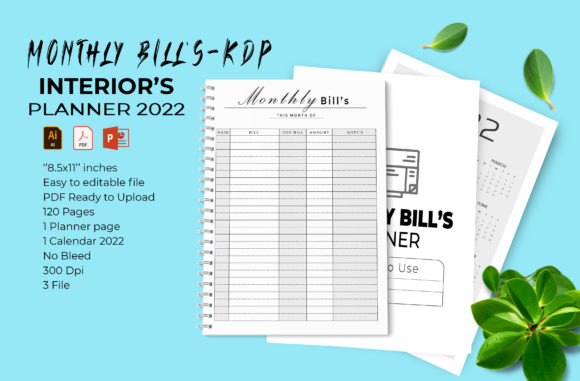
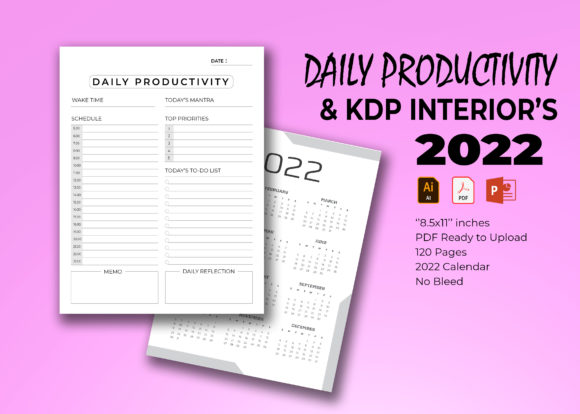
- Trim Size and Margins: The file is set to US Letter size (8.5 x 11 inches). This is a standard document size that offers ample writing space, distinguishing it from the more compact 6x9 inch planners often found in the marketplace. Crucially, this specific version is configured with No Bleed. This means all content stays within safe margins, eliminating the risk of text being trimmed off during binding—a common pain point for new publishers.
- Resolution and Print Quality: The included PDF is rendered at 300 DPI (dots per inch). While digital viewing can mask low resolution, physical printing requires this density to ensure crisp lines and legible text. Fuzzy interiors lead to negative reviews; therefore, verifying the 300 DPI standard is a non-negotiable quality check.
- Page Count Structure: With a total of 120 pages plus a 2022 calendar, this interior creates a substantial volume. Publishers should calculate the resulting spine width and printing costs based on this page count to ensure the final retail price allows for viable royalties. A 120-page no-bleed book has different cost implications than a thinner journal.
Editability: Vector Assets vs. Static PDFs
One of the most significant decision factors when choosing a KDP interior is the level of customization permitted. Many templates are sold as flattened PDFs, allowing only basic text overlays. In contrast, the Block Schedule KDP Interior discussed here includes fully editable vector sources.
The package provides Illustrator CC 2019 (.ai/.eps) files and Microsoft PowerPoint 2016 (.ppt) files alongside the ready-to-upload PDF. This distinction matters for several reasons:
- Color Customization: The ability to change colors easily allows publishers to create multiple variations of the same product. A single master file can be adapted into pastel, monochrome, or high-contrast editions without rebuilding the layout from scratch.
- Vector Scalability: The inclusion of 100 re-sizable vector shapes ensures that design elements remain sharp regardless of adjustments. Unlike raster images that pixelate when enlarged, vectors maintain integrity, which is vital if you decide to repurpose assets for marketing materials or social media graphics.
- Software Accessibility: Offering both Adobe Illustrator and PowerPoint formats broadens accessibility. Professional designers may prefer AI for granular control, while marketers or beginners might find PPT sufficient for adding branding, logos, or introductory pages without learning complex design software.
Publishers must weigh whether they actually need this level of editability. If the goal is to upload immediately without modification, the static PDF suffices. However, for those building a brand identity across multiple products, the editable source files provide long-term utility that static alternatives cannot match.
Comparing Block Scheduling to Alternative Planner Formats
Choosing the Block Schedule KDP Interior is ultimately a bet on a specific user psychology. It is helpful to compare this format against other prevalent options in the KDP ecosystem to determine market fit.
Block Schedule vs. Hourly Planners
Traditional hourly planners assign specific timestamps (e.g., 8:00 AM, 9:00 AM) to every line. While precise, this format can feel restrictive for users with fluid schedules or those who focus on task completion rather than clock-watching. The block schedule removes temporal rigidity, offering open boxes or segments labeled by priority or energy level rather than time. This makes the 2022 Block Schedule interior better suited for students, remote workers, and creatives, whereas hourly planners typically serve professionals with fixed appointment-based workflows.
Block Schedule vs. Blank Journals
Lined or dot-grid journals offer maximum freedom but zero guidance. Many users purchase journals intending to organize their lives but abandon them due to decision fatigue regarding layout. The block schedule provides a middle ground: enough structure to prompt action without dictating minute-by-minute activity. For publishers, this positions the block schedule as a "guided productivity tool" rather than mere stationery, potentially justifying a higher price point than generic notebooks.
Digital vs. Physical Considerations
While digital planning apps dominate the tech-forward segment, the KDP block schedule serves the analog preference demographic. Users choosing this physical format often seek tactile engagement and screen-free organization. The 8.5 x 11 size specifically caters to desk-based use rather than portable carry, suggesting a target audience focused on home office or classroom environments rather than commuters.
Tradeoffs and Limitations to Consider
No template is universally perfect. Evaluating the limitations of the 2022 Block Schedule KDP Interior prevents mismatched expectations.
Date Specificity: As a 2022-specific resource, this interior has a finite shelf life. Undated block schedules offer evergreen sales potential, whereas dated versions require timely marketing. Publishers acquiring this asset after 2022 must assess whether it serves as an archival reference, a template for future years, or if the 2022 calendar pages render it obsolete for current sales.
Size Constraints: The 8.5 x 11 inch format is excellent for writing space but less competitive in the "portable planner" category. If market research indicates your audience values pocket-sized or purse-friendly dimensions, this large-format interior may not align with user needs despite its high quality.
Niche Saturation: Productivity is a crowded category. Simply uploading a compliant block schedule does not guarantee visibility. Success depends on differentiation through cover design, keyword strategy, and unique value propositions added via the editable files (such as custom habit trackers or reflection prompts that competitors lack).
Best-Fit Scenarios for This Resource
Based on technical specs and format characteristics, the Block Schedule KDP Interior is most appropriate for specific publishing strategies:
- Brand Builders: Creators who want to leverage the 100 vector shapes and editable PPT/AI files to create a cohesive series of productivity tools.
- Educational Markets: The large format and block structure align well with academic planning, homeschool scheduling, or teacher organization resources.
- Productivity Coaches: Professionals seeking a physical companion workbook for clients who struggle with traditional time management methods.
- Beginner Publishers: Those who need a guaranteed KDP-compliant, no-bleed file to learn the platform without risking formatting errors.
Conversely, this resource may be less suitable for publishers targeting the travel journal niche, those requiring undated evergreen content, or designers who exclusively use software incompatible with CC 2019 or PowerPoint 2016 standards.
Making an Informed Selection
The decision to utilize the 2022 Block Schedule – KDP Interior should stem from a clear alignment between the product’s features and the intended audience’s organizational preferences. The combination of high-resolution print readiness, extensive editability, and the psychologically distinct block format offers a robust foundation for specific types of productivity books.
When evaluating this against other options, prioritize user experience over convenience. Ask whether the block format solves a genuine problem for your readers that hourly planners or blank journals do not. Verify that the 8.5 x 11 no-bleed specification matches your distribution and pricing strategy. Finally, consider the longevity of the 2022 dating versus the reusable value of the underlying vector assets. By approaching the selection with analytical rigor rather than impulse, publishers can effectively leverage this tool to create meaningful, functional resources that stand out in a competitive marketplace.